Bromley Roofing advice
How GRP Roofing Compares to Traditional Roofing Materials
How GRP Roofing Compares to Traditional Roofing Materials. A practical homeowner’s guide to flat roofing, inspections and written roofing quotations.
The best flat-roof solution depends on the deck, falls, outlets, edge details, penetrations, insulation and how the roof is used. The membrane name alone does not determine whether the finished roof will perform. This guide explains the practical checks a Bromley property owner should make before requesting or approving work.
Quick answer
The best flat-roof solution depends on the deck, falls, outlets, edge details, penetrations, insulation and how the roof is used. The membrane name alone does not determine whether the finished roof will perform.
GRP in this decision
GRP is formed as a rigid, joint-free laminate on a suitable deck. Detailing, weather conditions during installation and allowance for movement matter as much as the resin and mat.
Understanding flat roofing
The best flat-roof solution depends on the deck, falls, outlets, edge details, penetrations, insulation and how the roof is used. The membrane name alone does not determine whether the finished roof will perform.
Turn general information into a property-specific decision
- Identify the existing material and complete roof build-up
- Record the symptom, its timing and any previous repairs
- Check drainage, junctions and adjoining components
- Consider access, occupied areas and safe working arrangements
- Ask for a written scope with assumptions and exclusions
Do not compare GRP with a pitched covering as if they were interchangeable
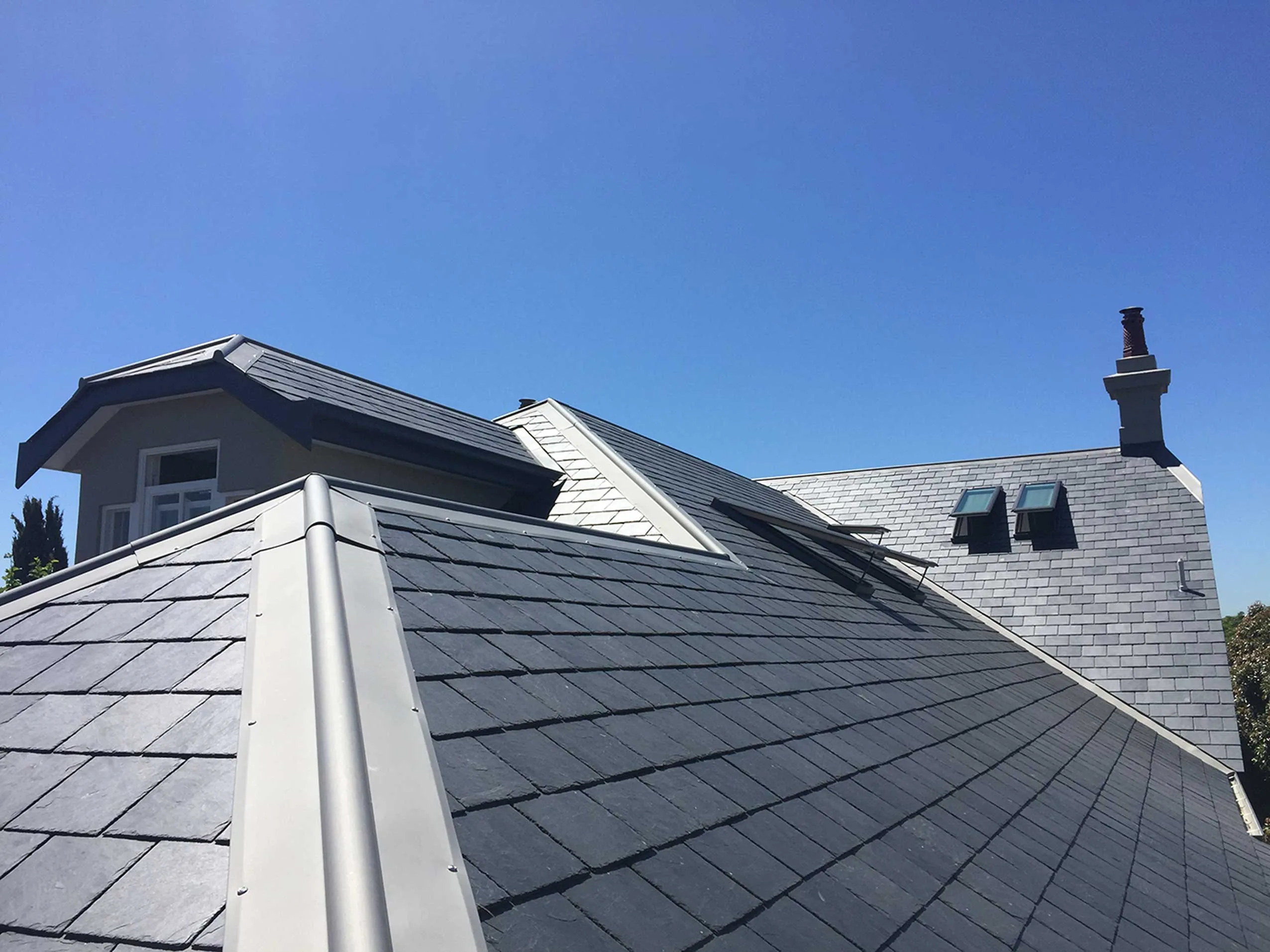
GRP is principally a formed waterproofing system for suitable flat and low-slope applications. Slate and tiles are drained coverings used at compatible pitches. The useful comparison starts by identifying roof geometry; only systems suitable for that geometry should reach the shortlist.
- GRP assessed against EPDM or reinforced felt for a suitable flat area
- Slate and tile choices assessed for compatible pitched construction
- Junction between flat and pitched areas designed as its own detail
- Structure and deck checked before comparing finish or price
- Maintenance access considered for both roof areas
What should be inspected?
- Splits, blisters, punctures and open seams
- Ponding water and inadequate falls
- Blocked or poorly positioned outlets
- Upstands, kerbs, edges and abutments
- Deck movement, softness or trapped moisture
- Insulation and condensation-control build-up
Plan for conditions found in Bromley and nearby areas
Relevant exposure includes driving rain, wind around roof edges, leaf and urban debris in outlets, and temperature movement at metal or membrane details. Inspection and maintenance should respond to the actual property rather than generic weather claims.
- Windward details checked after storms
- Outlets monitored through wet periods
- Debris traps included in maintenance
- Movement allowed for at rigid junctions
Ask how the work will be carried out safely
Homeowners do not need to design the contractor’s method, but they can ask what access is assumed, how edges and fragile areas are controlled and who supervises the work. Vague assurances are not a substitute for competent planning. The HSE roof-work guidance explains the main requirements and hazards.
Questions to ask in the quotation
- Is the deck sound and are the falls adequate?
- Why is the proposed membrane suitable here?
- Are trims, outlets and penetrations included?
- What preparation, insulation and guarantee are specified?
Related local service
For property-specific advice, see Flat roofing in Bromley. The service page explains inspection, access and quotation arrangements.
Frequently asked questions
Can old slates, tiles or fittings be reused?
Sound material may sometimes be retained or reused, but condition, matching, breakage allowance and any planning constraints should be assessed before promising a quantity.
How soon should a small defect be inspected?
Prompt inspection is sensible when water is entering, materials are loose or the problem is changing. Safety risks, wet electrics and bulging ceilings need immediate precautions.
Can work continue in bad weather?
That depends on the task and safe system. High winds, lightning, ice or heavy rain can prevent access and may make opening the roof inappropriate.
Discuss your roof with a local roofer
For an inspection and written quotation in Bromley, call 020 3886 3911 or email yourbromleyroofers@gmail.com. Describe the property, the roof area and any visible leak or damage. Photographs taken safely from ground level or inside the loft can also help.